Showing posts with label Asian Culture. Show all posts

Wednesday, June 17, 2009

Gaajan/Charak photos on Photojournale

I haven't been out on the streets with my camera for some days now. Sort of a sabbatical from photography; well if clicking the shutter is all that is about photography. However I worked on my photographs that I took during Bengali New Year celebration and published them on Photojournale:
"Rituals to celebrate Bengali New Year are many. Rural agrarian Bengal used to welcome the new year with the festival of Gaajan/Charak. It is a month long celebration that spans through the last month of Bengali calendar, Chaitra."
More text and photos at Photojournale : Photo journal stories and photo documentary from around the world

I am also putting some efforts recently to roll my new blog with Wordpress: Babbles of a deranged mind. This is in most part a text-only blog and in no way related to my photo-projects. I wish to let loose my ideas and opinions about the world around me through words in this place. I would really like to see you all in my new blog and hope you will find it interesting as much as this one.

Thanks for viewing!!


Full story...

Thursday, April 9, 2009

Summer is approaching...

This is the last month of Bengali calendar, Chaitra. We are at the threshold of the summer season. Well the truth is we are already into it. Report shows persistent temperature rise in the country, and as a result we are having short lived winter, prolong and tiring summer and untimely rain and storms. Not long back there used to be occasional thunder storm and cyclone during this time bringing relief from heat and humidity; even I have seen it in my childhood days. We call this climatic phenomenon Kaalboishakhi. But from the past few years it has become a rare event. So now we are enduring a long and sticky summer season.

Like changes in climatic condition there are changes in cultural horizon also. Chaitra is the witness to a month long observation of some rituals, that in many cases spills over to the first month of the new year Baishakh. We call it Gaajan and mostly the people from lower rung of the society are the participants. This is a folk religious celebration where an aboriginal god is the central deity whose priest is also a member of the participating community though now a days the festival has been related to the Hindu god Shiva and a Brahmin is seen to take up the role of the priest. Likewise the festival has lost its splendor and ferocity of celebration in Kolkata and its suburbs. The original spirit can now only be found within some interior pockets of rural Bengal.

Social scientists and cultural historians have shown the celebration to be a fertility ritual for an agricultural community where people pray for good rain and fertility of their land in the wake of a dry summer season. It has been shown to be a celebration of marriage between the Sun God and the Earth. The Hindi speaking people from Bihar also worship the Sun God during Chaitra which they call "Chaiti Chhat". The purpose seems to be the same, that is to pray for fertility and good harvest.


Full story...

Sunday, August 17, 2008

Morning Chinese Market

The morning market at Cheenapara, or the old China town in Central Calcutta, is the nerve centre of social life for the communities living in the neighbourhood. It becomes alive with activities from early in the morning. People flock to the place to collect their daily supply of vegetables, fish and meat. Although it has lost its past glory still a number of food stalls run by the Chinese people can be found here selling Chinese snacks, sweets and other food items.

In the slideshow below I present a glimpse of the daily life in the market premise. I tried to focus on the symbiotic co-existence of the different communities for whom the old China town at Central Kolkata is the home.


Full story...
Sunday, July 6, 2008

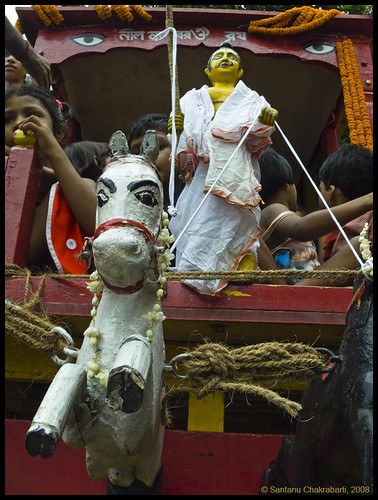
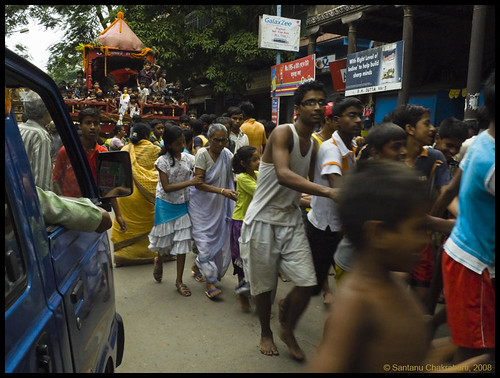
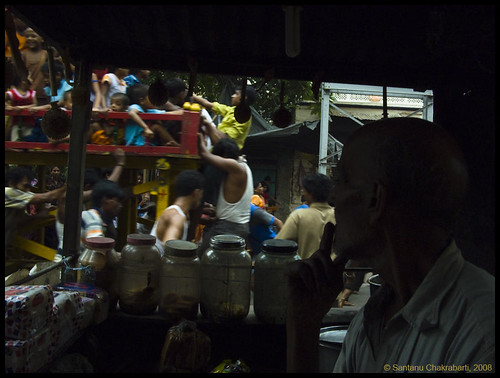
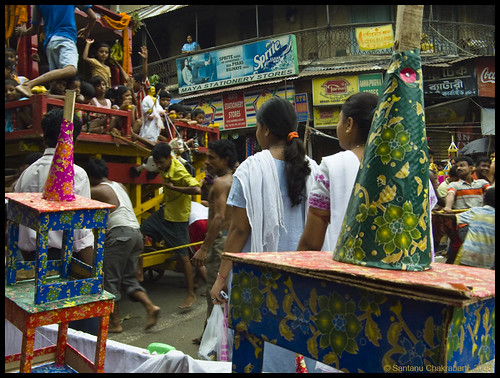
Rathayatra: The chariot festival of India

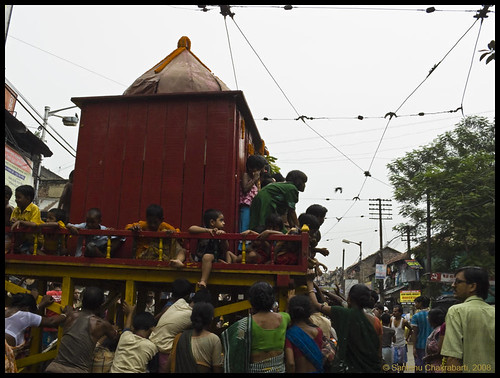
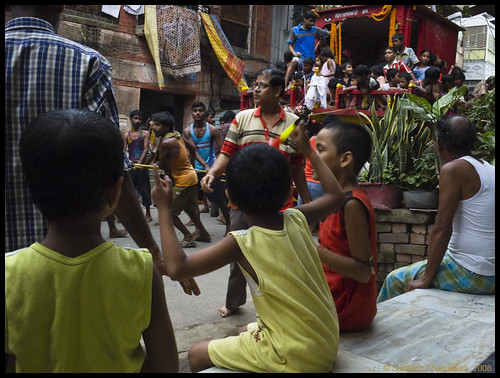
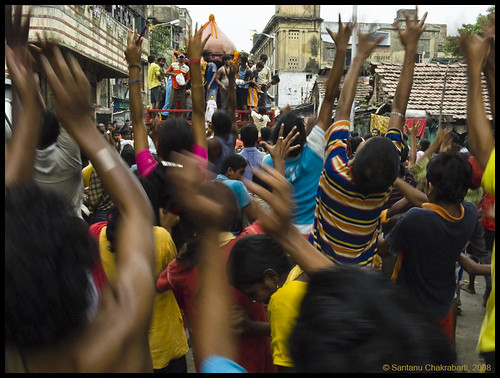
One of the important festivals of Monsoon season in India is Rathayatra, the chariot festival. The last Friday, that is 4th July this year, was the day for the festival. Although the rituals are observed for the seven consecutive days the first day celebration is the most cheerful and pompous one.


The original seat of the festival is at Puri in the state of Orissa though these days, due to Indian diaspora, it seems one can witness the festival in the most unexpected location of the world. In India, other than Puri, there are some places which are renowned for the festival. For example in Bengal the chariot festival in Mahesh is considered to second that of Puri in spirituality.


In India to drag the chariot for someone is considered an act of showing the highest honour to the person. When Swami Vivekananda returned after propagating the message of Hinduism at the World Parliament of Religion in USA, the students at Kolkata dragged his horse cart to show their heartfelt respect. The main activity in the festival of Rathayatra is also to drag the chariot of the Gods Sri Jagannatha, Sri Balarama and Devi Subhadra by the devotees. Sri Jagannatha is considered to be the God of all gods and the protector of the whole world. It is believed that on this occasion Sri Jagannatha comes down from his divine abode to meet his devotees on the Earth.


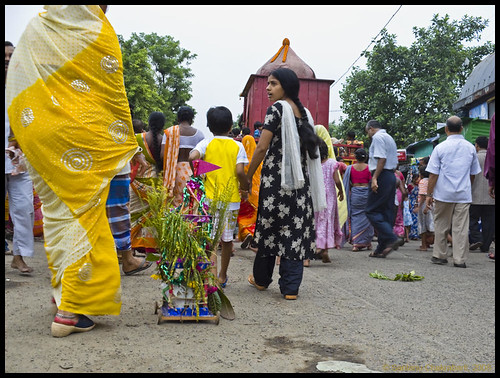
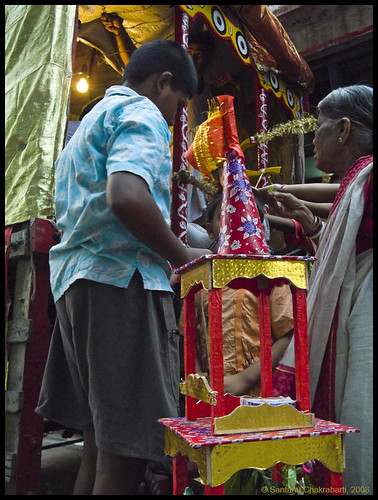
Each neighbourhood in Kolkata has its temple of Sri Jagannatha and the community brings out a chariot which they drag through the streets of the locality. People from the nearby houses come out on the street as the chariot reaches their place to show tribute to the God and to offer sweets and fruits to please Him. Some old families in Kolkata also bring out their family chariots to the street. Recently ISKCON is also celebrating the day in Kolkata and it is one of the most colourful and the biggest events here. However it is the children who seem to enjoy most on this occasion. They buy small wooden chariots from the shops, decorate it with flowers and leaves, place small idols of the gods inside it and then drag it through the streets with blowing of palm leaf horns. At the dusk people get back home buying some bengali snacks like papad, jeelabi, etc.


The God is said to be taken to His aunt's house on the chariot as the part of the first day celebration and after the seven days of observing the rituals on the last day the God is again taken back to His place on the same chariot.


Full story...
Wednesday, June 11, 2008

Bauls: The folk singers of Bengal


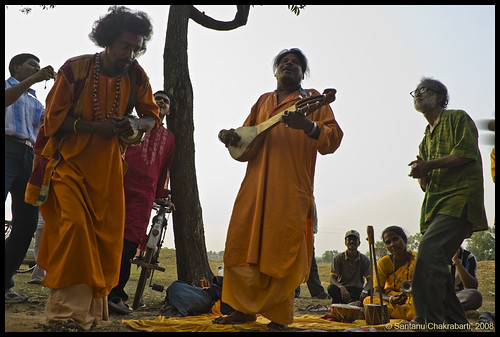
Bauls are folk singers of Bengal. They are mostly found in the Birbhum district of the state. The subject of a Baul song can be anything from daily tidbits to very complex spiritual theories. Baul songs are not only to be sung but also be accompanied by dance performances by the Bauls themselves. There is no rule for the dance movements; they are spontaneous body movements in response to the rythm of the song. Melodious nature and beautiful rythm of the Baul songs even make the audiences tap their toes.
Full story...
Sunday, March 30, 2008

Holi - The Color Festival

The Friday before the last one was very special, it saw religious celebrations by the three major religious groups - the Hindus, the Muslims and the Christians in India. The Hindus had Holi, the color festival, the Muslims commemorated the birth of the Prophet and the Christians observed Good Friday.

On that day I visited Santiniketan with my friends, which is one of the cultural hubs of Bengal. It was conceptualized by the great poet Rabindranath Tagore. Holi at Santiniketan has a special aura of cultural sophistication around it which people flock there to enjoy. However, change is the only constant in human life, so these days you can also find some not so well known rock-bands performing there. I tried to capture these moments while taking photos there.


Full story...

Sunday, January 27, 2008

Muharram in Kolkata

Its long since I haven't been around. Mostly due to some network failure at the beginning, but then I got busy with shooting the events that were coming up. After the autumn festival the two months of winter season, that is December and January, are most eventful. I wish to share my photographs on Muharram here. Others are following by soon.


Muharram is the first month of Islamic lunar calendar, Hijrah. It is one of the four months that have been designated as Holy according to the Islamic belief, the other three being - Dhul-Qa'adah (Zulqa'dah), Dhul-Hijjah (Zulhijjah) and Rajab. However the first ten days of the month are considered as most sacred. Fasting is advocated in the month of Muharram, but the fasting on the tenth day of Muharram, called Ashura, is particularly important, as it is supposed to lead to great rewards.


Muharram is an important month to the people of Islamic faith. Many auspicious events of Quranic history are believed to have taken place during this month, specially during the tenth day. Some of the events are: The Prophet Adam was born and his repentance was accepted on this day, the Prophet Abraham was saved from the Fire, the Prophet Ishmael was delivered from the Sacrifice, the Prophet Joseph was reunited with his father, the Prophet Job was cured of his illness and the Prophet Solomon was ordained as king; however no accurate historical evidences could be found for them.

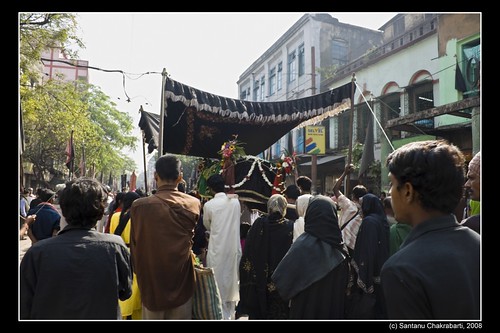
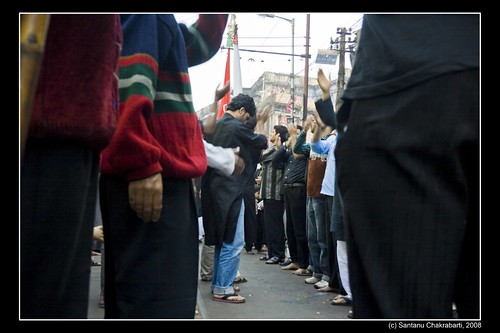
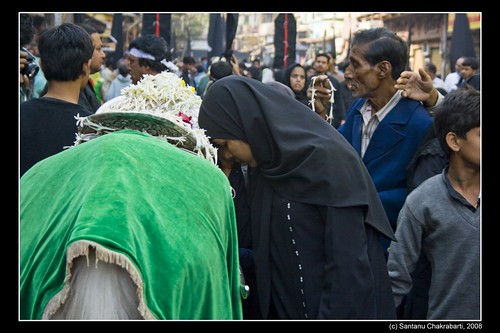
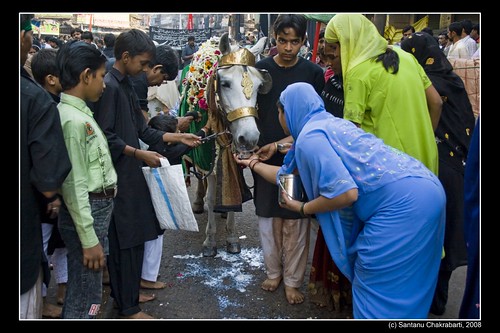
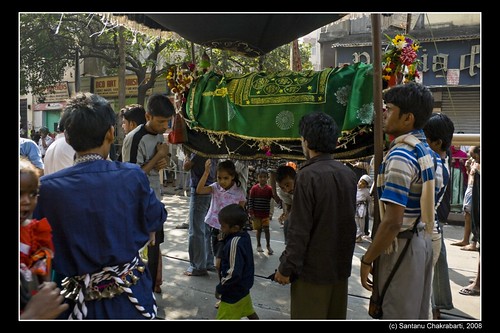
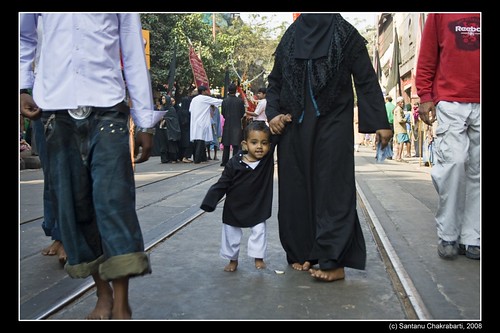
Shiite Muslims observes the first ten days of Muharram to commemorate the martyrdom of Imam Hussain and his family, the grandson of the holy Prophet. Hence Muharram is not a festival in the celebratory sense to the sect as it mourns the Karbala tragedy. Muslims build paper and bamboo replica of the martyr's tomb, called Tajiya or Tazia, and carry them into the street in a procession to mourn Imam Hussain's brutal assassination. Mourners walk barefoot, beat their chests and cry out the name of Imam Hussain. Some plaintive verses are recited to signify that Hussain and his family had to suffer terrible thirst during their murder. The youths whip them with chains or hit them with knives to draw blood out of their body to symbolize the physical pangs that Imam Hussain had to suffer. Horses decorated as a battle horse with swords, etc. are also taken out in the procession in memory of Hussain's horse, Duldul.


Sunni Muslims also commemorate Imam Hussain's martyrdom but in a less demonstrative manner, concentrating instead on its spiritual aspect.

The word Muharram is derived from the word Haram, which actually means forbidden; it also means respect. Hence the month of Muharram encourages people to forbid themselves from all worldly pleasures and to respect the great children of the Mother Earth by commemorating their sacrifices towards the establishment of Truth and Justice.

More photos in my Flickr.


Resources
=========

1. http://www.jannah.org/articles/muharram.html

2. http://www.indiawijzer.nl/tourism_travelling_to_india/fairs_and_festivals/march/muharram.htm

3. http://www.alinaam.org.za/library/imuharram.htm

4. http://www.indiaparenting.com/indianculture/festivals/fest009.shtml

5. http://muslims-r-us.blogspot.com/2008/01/what-really-happened-on-10th-muharram.html

Full story...